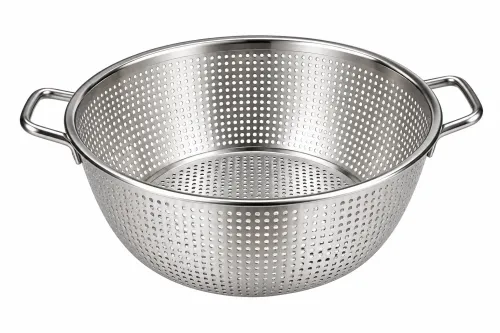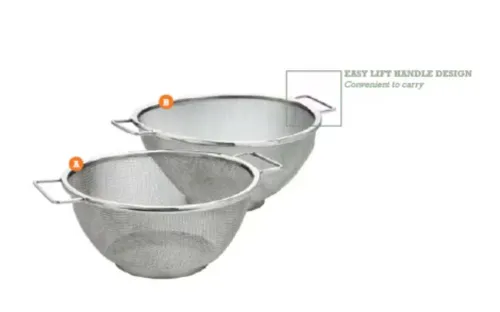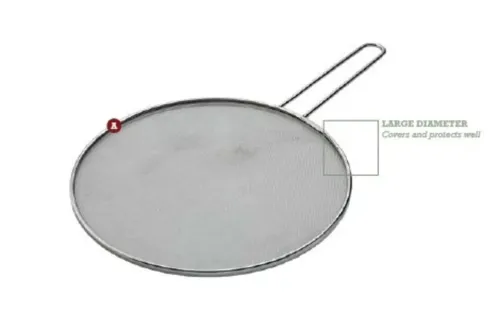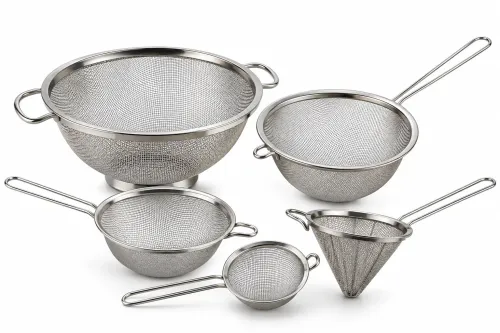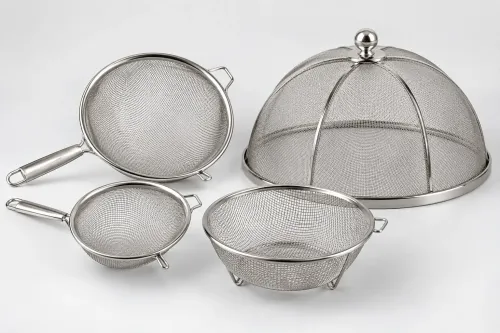
Stainless steel strainers are common in domestic and commercial kitchens, yet purchasing them without checking basic specifications can lead to disappointing performance. A product may look suitable on a shelf but prove inconvenient once it is used repeatedly for draining, filtering, or food preparation.
Buyers evaluating SS strainer manufacturers can avoid many problems by recognizing the most common purchasing mistakes.
Choosing Only by Diameter
Diameter is important, but it does not tell you everything about capacity.
Two strainers with the same outer width can have very different depths and shapes. One may handle larger quantities comfortably, while another is better suited to smaller preparation tasks.
Consider diameter, depth, and usable working area together.
Ignoring Mesh Characteristics
The mesh determines what the strainer can retain and how quickly liquids can pass through.
Choosing openings that are too large may allow unwanted particles through. Selecting an unnecessarily fine mesh can make some draining tasks slower.
Before ordering, identify what will actually be strained. This simple step can prevent many mismatched purchases.
Assuming All Stainless Steel Products Are Identical
The phrase stainless steel describes a broad category of materials and products. Finished utensil quality also depends heavily on construction and workmanship.
Examine:
- Mesh consistency
- Rim strength
- Joint quality
- Surface finishing
- Handle attachment
- Overall shape
For food-contact applications, buyers should also confirm suitability for the intended use and applicable requirements.
Overlooking Handle Comfort
A handle that feels acceptable during a quick inspection may become uncomfortable when used repeatedly.
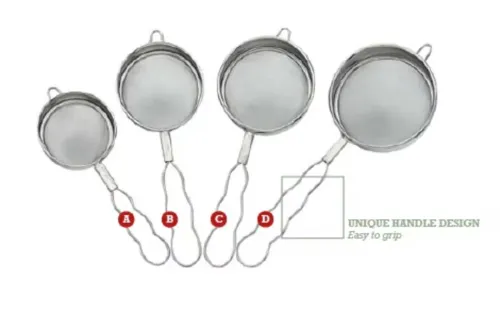
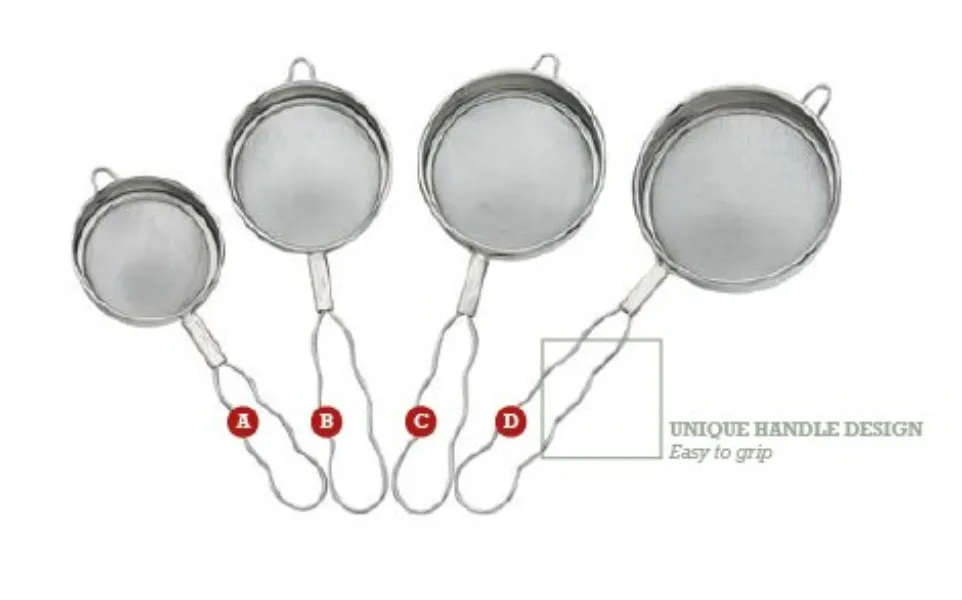
Commercial kitchens should pay particular attention to grip, length, attachment strength, and balance. The complete utensil should remain manageable when carrying the quantity for which it is intended.
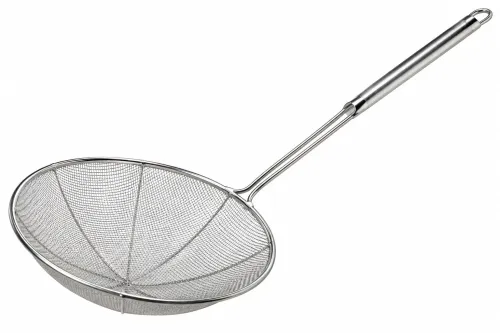
For frying applications, additional task-specific factors become important, so general strainers should not automatically be substituted for purpose-designed utensils.
Buying Bulk Stock Without Checking Consistency
This is a major concern for wholesalers and retailers.
A good sample is useful, but customers purchasing replacements expect the same dimensions and performance later. Significant variation between batches can create complaints and make inventory management difficult.
Trade buyers should clarify specifications and repeat-order consistency before committing to substantial quantities.
Selecting the Lowest Price Without Considering Usable Life
Unit price matters, particularly for distributors. Yet the cheapest product is not automatically the most economical choice.
A more useful evaluation considers:
- Purchase cost
- Construction quality
- Expected usage
- Product consistency
- Customer category
- Replacement frequency
Restaurants and catering businesses may place greater value on products suited to repeated handling. Retailers serving domestic users may need a broader balance between price points and specifications.
Mumbai's large kitchenware and hospitality market includes both requirements, making customer segmentation particularly useful for local dealers.
Failing to Discuss the Application With the Manufacturer
Manufacturers can only match a requirement accurately when buyers explain what they need.
Instead of asking simply for an SS strainer, provide details about dimensions, mesh, expected quantity, application, and customer category.
Unistar Kitchen Strainers, based in Mumbai, manufactures stainless steel strainers and other kitchenware for different requirements. Clear product specifications are especially useful for dealers and distributors sourcing inventory for customers across Maharashtra.
Better Buying Starts With Better Specifications
Most purchasing mistakes occur when a strainer is treated as a generic product.
The better approach is to define the task first. Decide what will be strained, how much will be processed, how frequently the utensil will be used, and what dimensions suit the working environment.
Then assess mesh, frame, handle, finishing, and manufacturing consistency.
This process takes slightly more attention at the purchasing stage, but it can result in a product range that better matches actual kitchen needs and reduces avoidable replacement or customer dissatisfaction.
Keywords