A mesh count alone cannot tell you how a strainer will perform: wire diameter, aperture, open area, material shape and loading conditions all change the result. By matching those variables to the product being processed, you can specify a strainer that drains fast enough, retains the right solids and survives repeated cleaning.
Key takeaways
- Calculate aperture from mesh count and wire diameter.
- Match opening size to particle size and material behaviour.
- Choose woven wire, perforated sheet or expanded metal by duty.
- Specify mesh, material, tolerances and inspection checks in writing.
What Do Mesh Count, Aperture and Wire Diameter Actually Tell You?
A 20-mesh label does not identify the actual opening by itself. Mesh count describes the approximate number of openings per linear inch, while the aperture opening also depends on wire diameter. For nominal square plain weave, estimate aperture in millimetres as 25.4 ÷ mesh count − wire diameter.
| 20-mesh cloth | Wire diameter | Estimated aperture opening | Approximate open area |
|---|---|---|---|
| 0.40 mm wire | 0.40 mm | 0.87 mm | 47% |
| 0.25 mm wire | 0.25 mm | 1.02 mm | 65% |
Open area is a better first indication of gravity flow than mesh size alone. Estimate it as aperture ÷ aperture plus wire diameter, squared, × 100. The wire diameter–mesh count relationship therefore matters: thinner wire increases throughput at the same mesh count, but offers less resistance to denting, abrasion and handling damage.
Specify nominal aperture in micrometres or millimetres when separation matters. Treat “100 mesh” and a certified 150 µm sieve as different specifications unless the supplier states the wire diameter, aperture basis and standard, such as ASTM E11 or ISO 3310-1. Mesh numbers, metric apertures and sieve-number conventions are not interchangeable.
How Do You Match Aperture to the Material Being Strained?
Choose the coarsest aperture that retains the largest unwanted solid at your intended loading rate. Test the actual product, temperature and load; particle shape, moisture and agglomeration can change retention.
| Material | Starting aperture choice | Main check |
|---|---|---|
| Tea leaves | Visibly open mesh | Retain leaves without slowing the pour |
| Coffee grounds | Coarse-to-medium opening | Hold grounds while liquid continues flowing |
| Clarified ghee | Finer screen | Capture sediment without rapid blinding |
| Flour sieve and powdered sugar | Dry sieve matched to the target fraction | Test damp agglomerates separately |
| Fruit pulp, sauces and wet stock | More open mesh or staged screening | Viscosity, surface tension and fibres can blind the surface quickly |
| Vegetable pieces, food debris and sink waste | Opening sized to the pieces and waste load | Do not size it for liquid flow alone |
A long fibre can pass lengthwise through an opening, then bridge it sideways. Fine mesh retains smaller particles but drains slowly and clogs sooner; coarse mesh drains quickly but lets more solids through. If large fibres or peel threaten a finer screen, add a coarse protective stage, accepting extra cleaning and possible crevices.
When Should You Choose Woven Wire, Perforated Sheet or Expanded Metal?
Choose woven wire mesh when you need small, uniform square openings for fine straining or sifting. Perforated sheet is better when rigidity, predictable round or slot openings, resistance to denting, and heavy solids matter more than fine filtration. Expanded metal provides an open, rigid structure for washing, drainage, and coarse separation.
| Construction | Opening and strength | Best use |
|---|---|---|
| Woven wire mesh, plain weave | Uniform square openings; easy to inspect and clean | General kitchen straining and dry sifting |
| Twilled weave | Supports finer or heavier wire than comparable plain weave | Higher strength or finer filtration |
| Dutch weave | Fine filtration with stronger mechanical support; mesh count is less informative | Controlled fine filtration under load |
| Perforated sheet | Rigid, stable round or slot openings; resists rough handling | Washing baskets, coarse screening, heavy solids |
| Expanded metal | Raised strands and diamond openings; rigid and highly open | Washing, drainage, coarse separation |
Do not compare these constructions by nominal opening alone. Check whether openings stay stable under load, whether food lodges at edges, and whether washing can remove residue without snagging fibres. Raised expanded-metal strands and perforation edges can hinder controlled fine sifting, while unsupported fine woven wire can wrinkle or tear during pressing.
How Do Use Conditions Change the Mesh and Support Design?
A cloth that works for dry flour can act like a finer filter in wet stock: moisture, surface tension and fibres blind openings before the nominal aperture has changed.
1. For dry use with flour or powdered ingredients, specify a uniform aperture, low blinding risk and enough flexibility for controlled shaking. Damp agglomerates and particle shape still matter; irregular lumps can bridge openings and stop flow.
2. For wet use with stock, sauces, ghee or fruit pulp, test the actual product at its intended temperature and loading rate. Viscosity, temperature, solids load and fibrous material determine usable open area more reliably than dry particle-size data.
3. A high solids load needs more open area, stronger wire or staged screening. Put a coarse protective screen ahead of a finer cloth when bones, peel or fibres enter the stream. This protects the fine mesh but adds components, cleaning time and possible crevices.
4. Pressing food through fine unsupported cloth can wrinkle, tear or pull it from the frame. Add a perforated support plate, heavier retaining ring or secure frame when force demands it, then check that the support does not block open area or create residue-trapping edges.
5. Select the wire alloy and joint design for service temperature, thermal expansion and cleaning chemicals. Support must improve durability without turning washing into the new failure point.
What Should You Put in the Mesh Specification and Quality Check?
A repeatable specification starts with a measurable opening, not “100 mesh.” State the nominal aperture in µm or mm, its basis—nominal woven aperture, perforation size or performance rating—and the aperture tolerance; “100 microns” is incomplete without that definition. Define US mesh numbers, metric micrometres and sieve-number conventions separately for export orders.
Use this purchase checklist:
- Specify nominal aperture, acceptable mesh tolerance, wire diameter, wire diameter tolerance, weave specification, material grade and minimum usable open area.
- Give frame length, width, depth, rim profile, handle dimensions and the load the mesh-to-frame joint must withstand.
- Request the mesh inspection method and certificate when controlled separation matters. ASTM E11 and ISO 3310-1 are useful references for test-sieve inspection, but do not treat either standard as proof that an untested kitchen strainer meets it.
- Measure apertures at multiple locations, check weave uniformity, identify blocked openings, record wire diameter and confirm that cloth stays attached to the frame or handle under load.
- For food contact, choose 304 stainless steel for general service or 316/316L when salt, chlorides or harsh cleaners increase corrosion risk.
- Inspect rolled edges, seams, weld projections, hollow handles, passivation and cleaning validation. The rim and joint can retain more residue than the mesh.
Unistar Kitchen Strainers can use these details to match construction and inspection to the application instead of quoting mesh count alone.
Related products
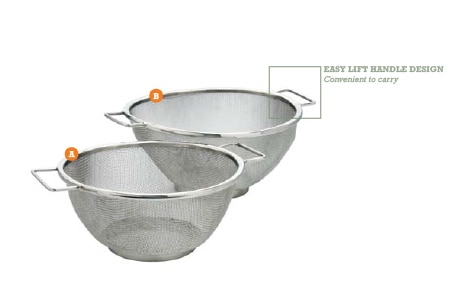 | Wire Mesh Colander / Fruit Basket Wire Mesh Colander / Fruit Basket We are known as a one of the leading Wire mesh strainer factories and Wire mesh Products manufacturers in India. View product → |
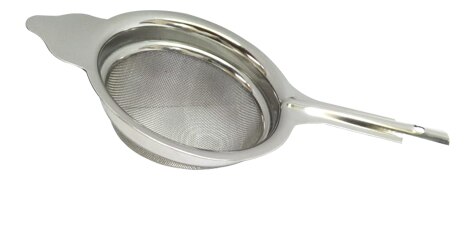 | Cut Strainers Specially designed to suit specific requirements We are leading manufacturers, suppliers and Exporters of Tea Strainer, Coffee Strainer, Wire Mesh... View product → |
How Do You Balance Filtration Accuracy Against Drainage and Cleaning?
Choose a finer mesh only when the gain in filtration accuracy outweighs lower flow rate, greater pressure drop and longer drainage time.
In a gravity-fed kitchen strainer, select the coarsest aperture that reliably removes the unwanted fraction; a fine screen for clarified-ghee sediment or small flour particles needs a lower solids load, frequent clearing and careful washing.
A practical comparison looks like this:
| Option | Benefit | Cost or limitation |
|---|---|---|
| Fine mesh | Retains small particles | Faster clogging and blinding; harder cleaning |
| Coarse mesh | Rapid drainage for vegetables and large debris | Less controlled separation; solids pass through |
| Heavy wire | Greater strength and tear resistance | Less open area, more weight and residue surface |
| Light wire | Higher flow and flexibility | Easier denting, snagging and damage |
Check the frame, handle and mesh attachment against actual pressing, lifting and dumping loads. A short trial with the intended product should record flow rate, drainage time, retained material, visible blinding, cleaning effort and damage after repeated use. That evidence exposes the real trade-off between retention, clogging, strength, weight and cleanability before approval.
Frequently asked questions
What do mesh count, aperture and wire diameter tell you?
Mesh count indicates openings per linear inch, while aperture gives the actual opening size. Wire diameter affects aperture, strength and open area; for nominal square plain weave, estimate aperture in millimetres as 25.4 ÷ mesh count − wire diameter.
How do you match aperture to the material being strained?
Choose an aperture smaller than the particles you need to retain, then check viscosity, fibre content, moisture and the risk of blinding. A finer opening improves separation but slows drainage and cleaning.
When should you choose woven wire, perforated sheet or expanded metal?
Use woven wire for precise particle separation, perforated sheet for larger openings and greater rigidity, and expanded metal when you need an open, stiff surface with reduced screening precision.
How do use conditions change mesh and support design?
Account for temperature, pressure, abrasion, impact, corrosion, flow rate and cleaning method. These conditions determine the material, wire diameter, frame, backing and support required.
What should you include in a mesh specification and quality check?
Record mesh type, material grade, mesh count, aperture, wire diameter, dimensions, tolerances, frame details and finish. Check openings, joins, flatness, damage and traceability against the specification.
Related products
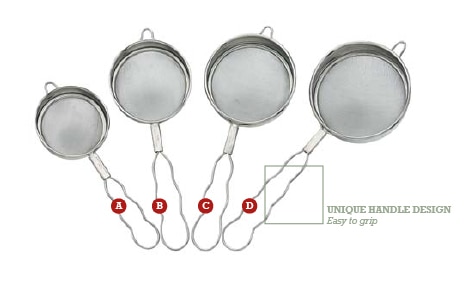 | KitchenStainers Unik Corporation is one of the best tea strainer makers in India, known as a tea strainer manufacturers, wire mesh products manufacturers, wire... View product → |
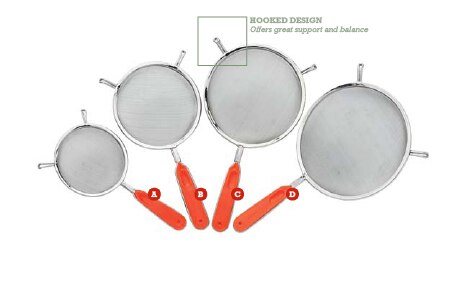 | Mild Steel Strainer And Tin Plated Strainer Mild Steel Strainer And Tin Plated Strainer Mild Steel Strainer and Tin-Plated Strainer are versatile kitchen tools designed for different culinary needs. View product → |
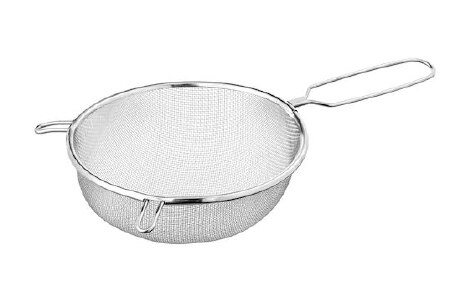 | Galvanised Iron Strainers This truly utilitarian bowl can be used for so many tasks and projects, from cooking to crafts to gardening projects. View product → |
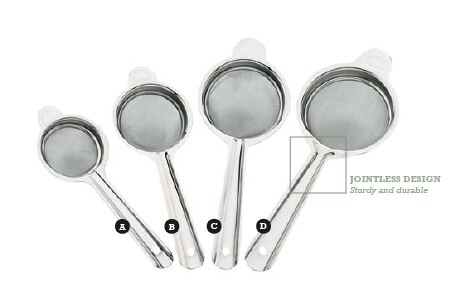 | KitchenStainers The Jointless Strainer introduces a seamless approach to kitchen tasks, boasting a unified design for effortless straining. View product → |