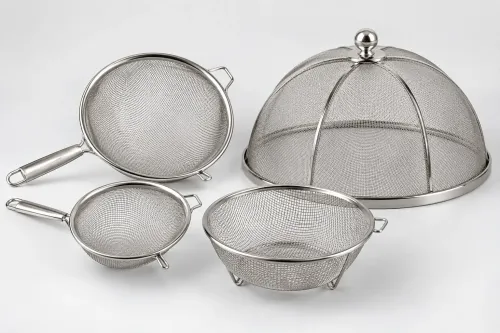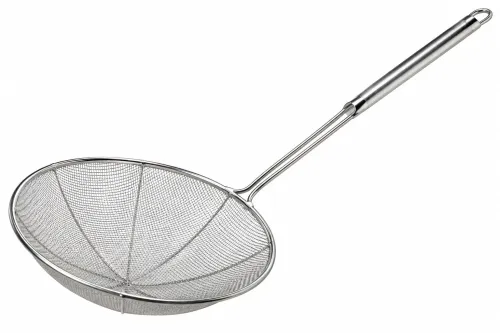
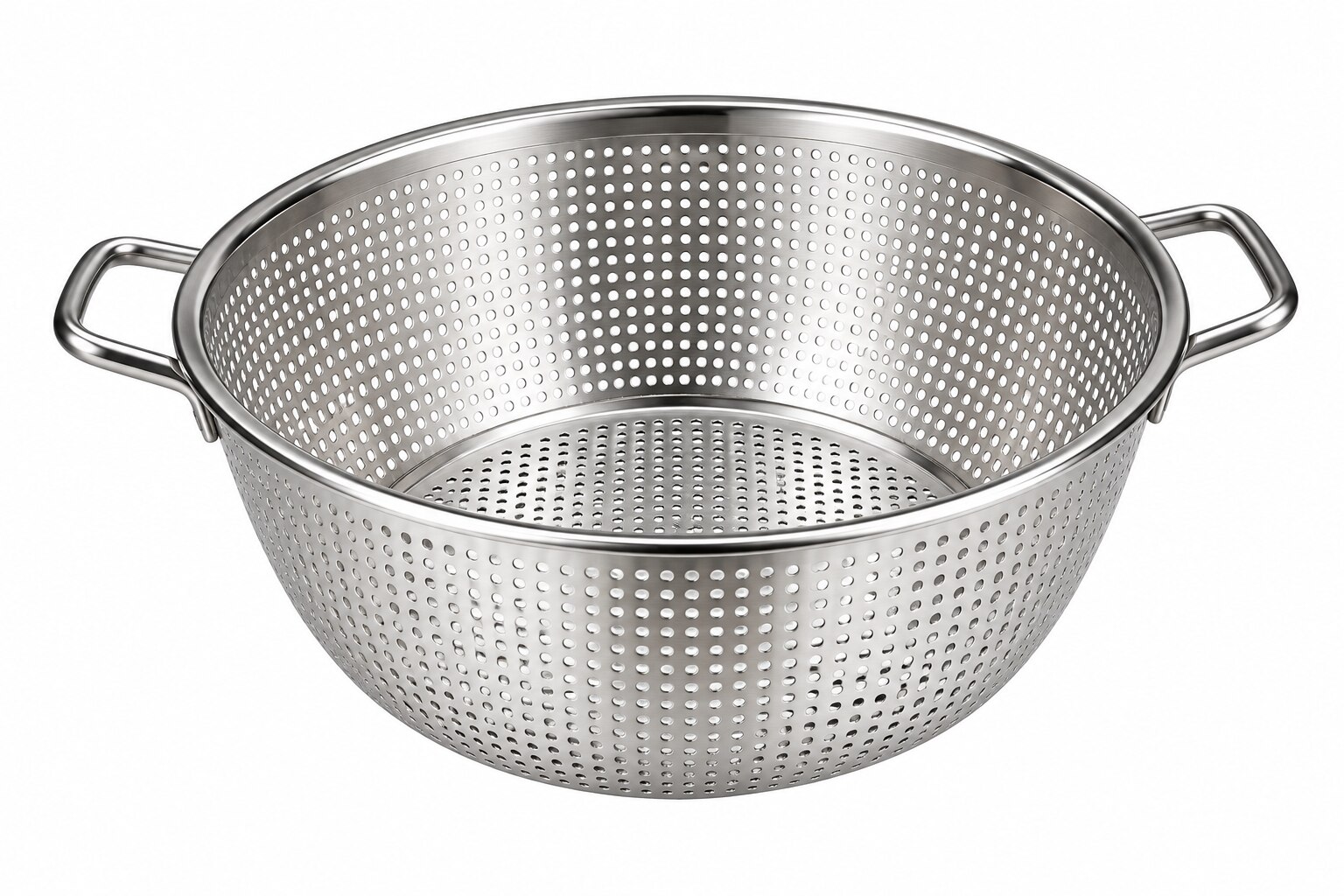
A basket that looks suitable in a photograph can fail at the sink, wash tank or packing line because its opening size, rim, handles, material or tolerances are wrong. By checking the intended use, construction, factory controls, documents, logistics and acceptance terms, you can compare manufacturers against measurable requirements rather than product images or generic claims.
Key takeaways
- Give suppliers exact dimensions, batch weight, produce type and washing method.
- Specify mesh opening, wire thickness, frame strength and food-contact material.
- Request factory quality records, safety controls, capacity evidence and export documents.
- Approve samples against written tolerances before placing a production order.
Define the washing job and the dimensions before comparing suppliers
A vegetable washing basket that is 5 mm too wide can jam in a sink, spinner or packing line, even if its production sample looks acceptable. Tell each manufacturer whether the job involves hand washing, sink use, or commercial batch washing, and state the produce, batch weight, lifting frequency, agitation method and usable volume required.
1. Send a dimensional drawing, not a verbal description. Specify aperture, rim diameter, basket depth, handle position, wire diameter, flatness, rim thickness, maximum load and allowable distortion. Add the receiving sink, spinner or packing-equipment dimensions so the basket seats and clears moving parts.
2. Describe the washing cycle in operating terms: water temperature, cycle duration, produce acidity, chloride-bearing water, hypochlorite concentration and caustic-cleaner exposure. Acidic residues, bleach and chlorides can cause pitting or stress-corrosion damage; a salt-spray result does not prove suitability for your actual regime.
3. State the required handling pattern and drainage outcome. Repeated lifting and agitation demand stronger handle joints than occasional rinsing. Ask the supplier to assess the intended construction and inspect handles separately for cracked welds, loosening, permanent deformation and sharp fracture points.
For US-bound baskets, check the intended use against the applicable FDA Food Code provisions for corrosion resistance and smooth, cleanable surfaces; the Food Code is a model code, not automatic federal approval. For EU sales, identify the national requirements for metallic food-contact articles rather than accepting “stainless steel” as compliance evidence.
Specify mesh performance, construction and food-contact materials
Drainage and retention depend on actual geometry, not a nominal mesh count. State the mesh opening size and wire diameter in millimetres: for square woven wire cloth, open area is approximately [aperture ÷ (aperture + wire diameter)]² × 100.
A 2 mm opening with 0.5 mm wire gives about 64% open area; a 1 mm opening with 0.5 mm wire gives about 44%, so rinsing and drainage differ sharply.
Ask the manufacturer to specify:
- Woven wire mesh for fine retention, perforated sheet for larger, uniform holes, or welded mesh for rigid baskets; each method changes flow, strength and cleanability.
- Seam, rim and handle construction, with continuous welds or folded edges where possible. Reject burrs, sharp cut-wire ends, weld spatter, incomplete welds and narrow crevices that trap soil or defeat brush cleaning.
- Final surface treatment, including polishing and passivation where applicable. A smooth, crevice-free finish reduces residue and extends service life.
- Every food-contact component, including solder, adhesive, elastomer, plating, coating and processing residue. “Stainless steel” alone does not prove compliance; request the applicable food-contact documentation.
Material choice affects corrosion resistance and cost:
| Grade | Practical choice | Evidence and limitation |
|---|---|---|
| 304 stainless steel | General-purpose washing water and food handling | State 304 or 304L and request a mill or heat-lot certificate |
| 316 stainless steel | Chloride-containing water or aggressive cleaners | Molybdenum improves resistance, but pitting remains possible; request the same certificate |
Tie the finished basket to its wire or sheet heat number, forming or welding line, finishing lot and inspection record. Use a retained golden sample and measurable tolerances, not photographs.
Audit the factory process, safety controls and quality records
Ask to see the production flow, inspection records and traceability system before approving a supplier. The records must connect each finished basket to its stainless grade, wire or sheet heat number, production lot, forming or welding line, finishing process and final inspection result. This matters when an exporter combines goods from several factories.
1. Request the dimensional drawing used on the shop floor. It must state aperture, wire diameter, rim diameter, depth, handle position, flatness and allowable distortion. Check that operators control mesh weaving, wire drawing, welding and the rolled rim against these figures, not against a photograph or an approximate “mesh” count.
2. Inspect safety controls at the finishing and inspection stations. Look for continuous, smooth rims; fully fused welds; no sharp wire ends; clean surfaces; and documented passivation or other finishing checks where specified. Ask how the factory prevents carbon-steel contact and salt contamination on stainless parts.
3. Require separate handle and joint qualification. The supplier should record a static load test with a stated safety margin, repeated lifting or agitation cycles, and inspections for cracked spot welds, loosening, permanent deformation and sharp fracture points. A pull test on one undamaged prototype does not prove fatigue life.
4. Review packing instructions and retained samples. Nested baskets need separators or controlled nesting height, while damp packaging must not trap moisture against stainless surfaces. Confirm that each lot has measurable inspection results and that mixed-grade or mixed-design shipments trigger a documented rejection and remedy.
A supplier that cannot produce these records is asking you to inspect quality after the shipment has already been damaged.
Test production capacity, export readiness and after-sales control
Ask for production capacity in units per shift or month, not a claim that the factory is “large.” Compare that figure with the quantity already committed to other buyers, available forming and welding lines, inspection staffing and the promised lead time. Request a recent production schedule and a pilot order before placing a full shipment.
Require evidence of export experience: bills of lading with buyer details removed, destination-market packing records and references for comparable baskets. Confirm who controls packing against deformation and corrosion during sea freight. Nested baskets need separators or a stated maximum nesting height; stainless surfaces need protection from carbon-steel contact, salt contamination and trapped wet packaging.
Put these controls in the quotation and contract:
- Require a dimensional drawing covering aperture, rim diameter, depth, handle position, wire diameter, flatness and allowable distortion.
- Tie production to a retained golden sample and measurable tolerances, not photographs. Record the material grade, finish, handle design, packing method and inspection method.
- Require traceability from each finished lot to the stainless heat number, forming or welding line, finishing process and inspection record, especially when the exporter consolidates factories.
- Define after-sales action: response time, evidence required, replacement or credit terms, freight responsibility and the remedy for mixed-grade, mixed-design or deformed shipments.
Test handles and joints through static loading with a safety margin and repeated lifting cycles; inspect for cracked welds, loosening, permanent distortion and sharp fracture points. A prototype pull test alone does not prove fatigue life.
Lock the purchase to samples, tolerances and an acceptance plan
Approve the shipment against a retained golden sample, not photographs. Attach a dimensional drawing stating aperture, rim diameter, depth, handle position, wire diameter, flatness and allowable distortion. A basket that looks correct can still fail to seat in your sink, spinner or packing equipment.
Make the purchase order identify:
- Exact mesh or perforation, material grade, finish, handle design and packing method
- The material certificate required for each lot; for stainless steel, name 304/304L or 316/316L and require a mill or heat-lot certificate
- The sample-retention period, inspection method, and remedy for mixed-grade or mixed-design shipments
- A pre-shipment inspection, with photographs, measurements and lot identification supplied before dispatch
Use ISO 2859-1 to set sample sizes and AQL categories, but do not let it define quality. Safety-critical features need separate limits.
| Feature | Test or evidence | Acceptance control |
|---|---|---|
| Sharp edges, loose wires and open welds | Visual and hand inspection | Zero defects |
| Mesh opening, wire diameter and dimensions | Gauge and drawing comparison | Agreed tolerances |
| Handle and joint | Static load with safety margin, repeated lifting or agitation cycles | No cracking, loosening, permanent deformation or sharp fracture |
| Surface and finish | Cleanability and visual inspection | No inaccessible crevices; cosmetic marks kept separate from functional defects |
For US-bound baskets, record the intended use and check it against the applicable FDA Food Code provisions. Whether comparing Unistar Kitchen Strainers with another exporter, reject any lot that fails a critical feature rather than averaging it into an acceptable AQL result.
Related product
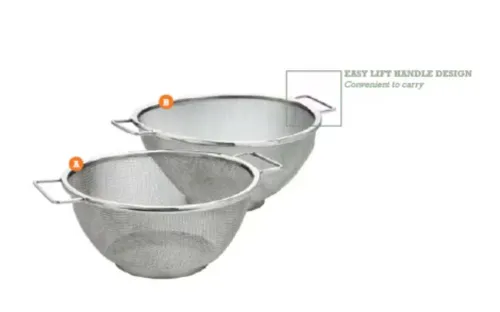
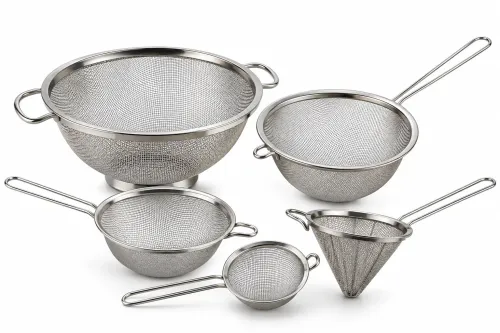
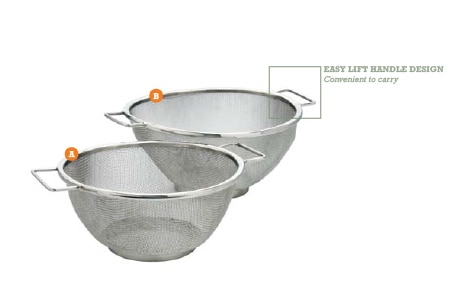 | Wire Mesh Colander / Fruit Basket Wire Mesh Colander / Fruit Basket We are known as a one of the leading Wire mesh strainer factories and Wire mesh Products manufacturers in India. View product → |
Frequently asked questions
What information should you give a vegetable washing basket manufacturer?
State whether you need hand washing, sink use or commercial batch washing, then provide the produce type, batch weight, lifting frequency, agitation method, usable volume and exact dimensions.
Which mesh and construction details should you compare?
Compare mesh opening, wire or sheet thickness, frame strength, handle construction, drainage performance and the stated food-contact material.
How can you audit a washing basket factory?
Review the factory process, food-contact safety controls, inspection steps, traceability records, corrective-action records and quality documents for finished batches.
What should you test before approving a production order?
Test the sample for dimensions, fit, drainage, load handling, surface finish and washing performance, then record measurable tolerances in the purchase agreement.