A strainer can look polished yet drain slowly, shed sharp burrs, trap residue or corrode after repeated washing. By the end, you will know which material records, mesh measurements, production checks and shipment tests demonstrate quality instead of merely claiming it.
Key takeaways
- Request heat numbers and material test reports for incoming stainless steel.
- Confirm 304 or 316 grade with a traceable mill certificate.
- Measure mesh openings; do not rely on the stated mesh count alone.
- Inspect welds, handles, rims, and surfaces before approving a supplier.
How quality control follows the strainer from steel to finished item
A defined SS strainer manufacturer quality control process begins before production. Incoming stainless-steel inspection confirms the grade, heat or batch number, surface condition, and supplied wire or sheet dimensions against the purchase specification.
1. Inspectors perform wire-diameter checks with a calibrated micrometer. They verify mesh construction, nominal aperture, wire diameter and tolerance; mesh count alone is insufficient because clear opening depends on pitch and wire thickness.
2. Forming controls measure dimensions after drawing, rolling or pressing. Record rim diameter, depth and circularity, since an oval or distorted rim can rock on a bowl or prevent even seating.
3. Inspect welded or seamed areas for open joints, incomplete weld penetration, spatter, heat tint, embedded particles and rough surfaces. Check the rim-to-mesh junction and handle attachments for crevices that retain food soil.
4. Final inspection records handle alignment, rim fit, balance and mesh attachment. The acceptance checklist must confirm uniform mesh apertures, complete burr removal, smooth food-contact surfaces, secure handles, no sharp edges and a rim that sits evenly.
5. If sampling follows ISO 2859-1, define the lot, inspection level, AQL and defect classifications on the inspection plan. Set separate critical acceptance rules for sharp edges, broken wires, open welds, excessive apertures and loose handles; an average defect limit must not conceal these failures.
Retain the material record, inspection measurements, lot identification and corrective-action report. Sampling accepts or rejects a lot; it does not prove every individual strainer is defect-free.
Choosing 304 or 316 steel and proving food-contact safety
Choose AISI 304 for ordinary food preparation, mild detergents and routine washing when chloride exposure is controlled. Choose AISI 316 for salty foods, brine residue, coastal storage or aggressive commercial wash cycles because its molybdenum content improves chloride resistance and reduces pitting risk.
| Grade | Suitable environment | Main limitation |
|---|---|---|
| AISI 304 | Routine kitchens, fresh foods and controlled washing | Chlorides can cause pitting |
| AISI 316 | Salty products, brine, coastal storage and harsher washing | Concentrated chlorides and harsh chemicals can still corrode it |
Neither grade is immune to concentrated chlorides, stagnant food deposits or aggressive chemicals. Remove residue promptly and prevent chlorine-based cleaners from drying on the surface.
Ask for a material certificate that names AISI 304 or AISI 316 and links its heat number to the supplied mesh or strainer lot. For higher-risk orders, specify the EN 10204 certificate type; request a certificate reporting actual inspection and test results, such as type 3.1, when traceability and test data matter.
After welding, grinding or forming, ask how the surface was cleaned, descaled and passivated. ASTM A380 distinguishes cleaning, descaling and passivation, while ASTM A967 passivation covers nitric-acid, citric-acid and electrochemical treatments plus free-iron checks.
Request records for weld filler, solder, tin plating, coatings and every other food-contact material. EU-bound goods need evidence aligned with Regulation (EC) No. 1935/2004, traceability records and documented controls under Regulation (EC) No. 2023/2006. “Food grade” alone proves nothing.
Measuring mesh openings instead of trusting a mesh label
Confirm the clear opening on a production sample before approving a strainer. Ask the supplier to state the nominal aperture, wire diameter, mesh designation and tolerance; mesh count alone is incomplete because clear opening depends on wire diameter and pitch.
1. Require measurements from calibrated optical or dimensional equipment. The manufacturer should record aperture and wire diameter across representative areas, then report mesh aperture uniformity and any nonuniform, blocked or stretched openings.
2. Check the specification against ISO 9044, which provides references for woven wire cloth aperture, wire diameter and tolerances. ASTM E11 defines controlled test-sieve designations, but it is not a synonym for every kitchen mesh.
3. Match the opening to the separation task. Fine mesh suits tea dust, clarified coffee, ghee and smooth sauces; choose flour mesh for the texture you want, not for a generic “fine” label.
| Mesh range | Suitable work | Main trade-off |
|---|---|---|
| Fine | Tea dust, coffee, ghee and sauces | Higher particle retention, lower flow rate |
| Medium | Washing produce and draining smaller solids | Balanced flow rate versus particle retention |
| Coarse | Pasta, vegetables and sink debris | Faster flow, lower particle retention |
A fine-mesh SS strainer is the wrong choice for fast drainage, large solids, high-volume separation or continuous flow because it clogs sooner and needs more rinsing. Test the sample with the intended material and confirm aperture performance before production begins.
How construction quality affects work during a shift
Quality checks prevent slow prep, contamination risk and avoidable injuries. An oversized or distorted aperture lets unwanted particles through, while fine mesh or blocked apertures slow drainage and force repeated unclogging. Poor forming leaves an oval rim that rocks on a bowl; misaligned or loose handles can tip a loaded strainer.
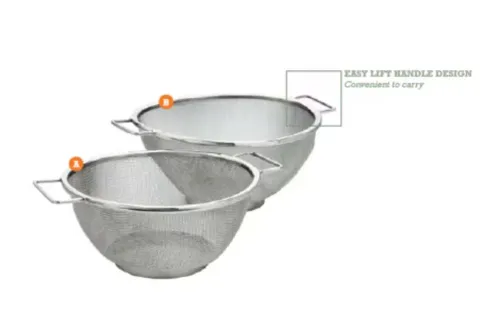
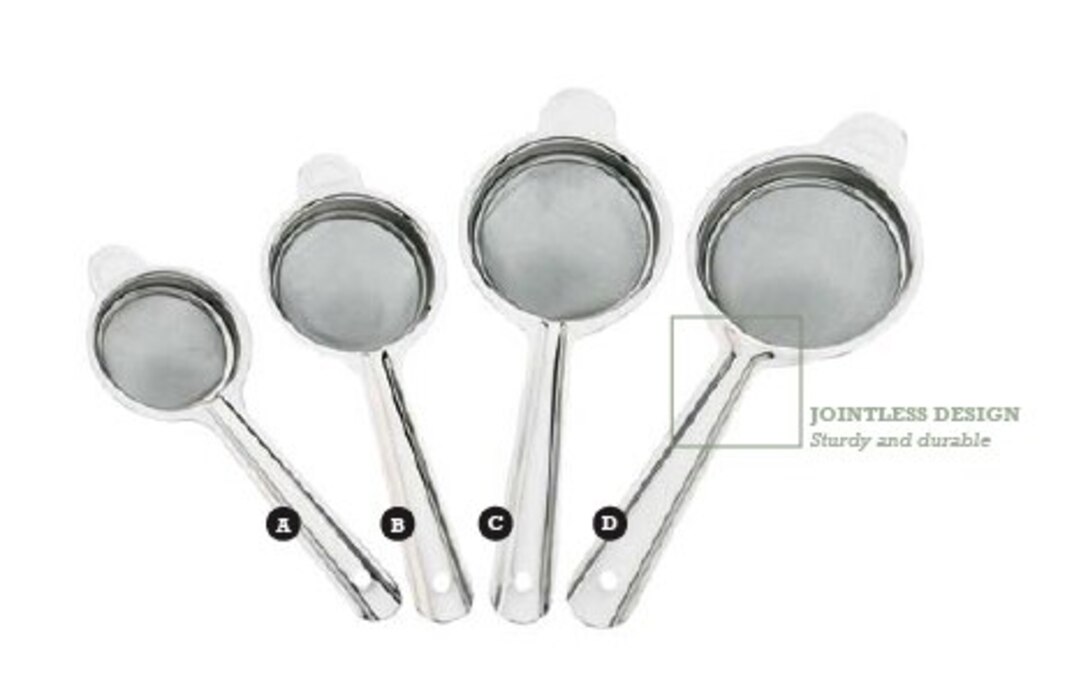
1. Inspect construction before use. Check the rim-to-mesh junction, folded edges, spot-welded attachments and handle alignment. Reject sharp burrs, broken wires, open welds, rough welds, folded edges, spatter, embedded abrasive particles and leaks; these defects trap food soil, complicate washing and create cut hazards.
2. Ask commercial suppliers for evidence from hot-liquid exposure, loading, stacking, dishwashing and sanitising conditions. Weld discoloration and heat tint need controlled cleaning and finishing; where specified, request passivation records rather than accepting a service-life claim.
3. On receipt, count and identify every item, verify the material marking, test fit and balance, and run water through the mesh. Record dents, blocked apertures, excessive openings, handle movement and leaks before acceptance. A sampling plan does not make every strainer defect-free, so define critical defects separately.
4. Follow cleaning and maintenance instructions: remove food from the rim and mesh, avoid abrasive pads on polished surfaces, dry parts after washing and separate incompatible metals during storage. This protects commercial kitchen strainer quality and reduces rework, replacement purchases and downtime.
The supplier evidence that turns a catalogue claim into control
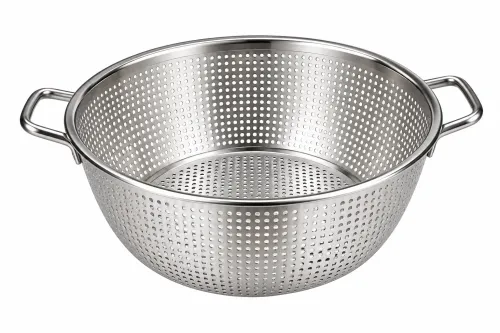
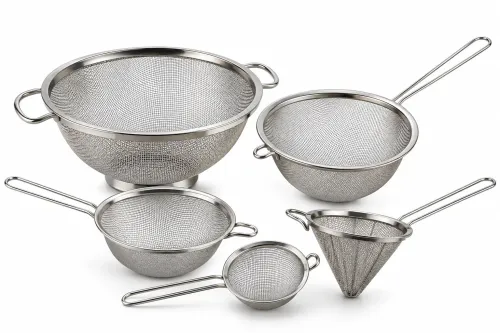
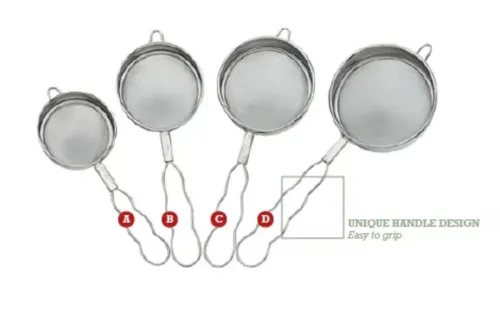
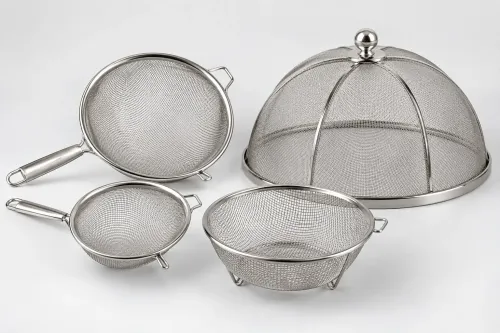
Compare SS strainer suppliers through evidence, not polished photographs or broad product descriptions. Begin with sample approval: sign off a production sample against a written specification covering grade, aperture, wire diameter, dimensions, circularity, rim fit, handle alignment, finish and edge safety.
Your specification should identify these acceptance checks:
- Uniform apertures and stated tolerance
- Correct wire diameter and mesh designation
- Circular rim with even bowl or vessel fit
- Aligned handle that does not tip a loaded strainer
- Smooth finish, complete burr removal and no sharp edges
- Secure welds, seams and mesh attachment
| Evidence | Weak claim | Useful control |
|---|---|---|
| Mesh | “Fine mesh” | Nominal aperture, wire diameter, designation and tolerance |
| Material | “Stainless steel” | Grade, heat or batch number and material certificate |
| Inspection | “Quality checked” | Inspection reports with measurements and acceptance limits |
| Sampling | “Passed inspection” | Lot definition, inspection level, AQL and critical-defect rules |
Ask whether repeat orders use the same drawings, gauges, mesh source and acceptance limits. Compare dimensions from multiple batches; one accurate sample does not prove repeat-order consistency.
Request batch records showing material grade, mesh specification, production batch, inspection date, inspector or test record and corrective action. ISO 9001 certification confirms a quality-management system, not your aperture, finish, stainless grade or burr-free condition.
Examine packaging for rim protection, mesh separation and moisture control. Agree lead times, complaint response, replacement terms and the quarantine process for nonconforming goods. Test received samples by water flow, visual inspection and dimensional measurement; Unistar Kitchen Strainers can be assessed on these same controls.
Frequently asked questions
How does quality control follow a strainer from steel to finished item?
It starts with incoming checks for stainless-steel grade, heat or batch number, surface condition, wire or sheet dimensions, and purchase-specification compliance. Finished items then require checks of mesh, welds, edges, handles, rims, dimensions, and surface condition.
When should you choose 304 instead of 316 stainless steel?
Choose 304 for most kitchen and food-processing environments. Choose 316 when the strainer will face higher chloride exposure, salty ingredients, or more corrosive cleaning conditions. Ask for a material test report that identifies the grade and heat number.
How can you verify strainer mesh openings?
Measure several openings with a calibrated optical comparator or microscope, record the wire diameter, and compare the results with the purchase specification. Mesh count alone does not identify the opening size because wire diameter changes the clear aperture.
Which construction details affect a strainer during a commercial shift?
Check that the mesh is tensioned, securely joined, and free from sharp edges. Inspect handle attachment, rim stiffness, weld continuity, surface finish, and fit between moving or nested parts because these details affect cleaning, throughput, safety, and service life.
What supplier evidence supports a strainer quality claim?
Request the approved specification, incoming inspection records, heat or batch traceability, material test reports, mesh measurement results, final inspection records, and corrective-action records for rejected items.