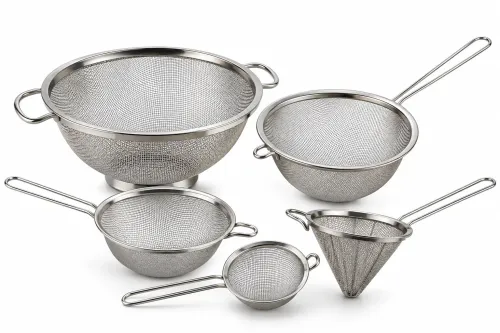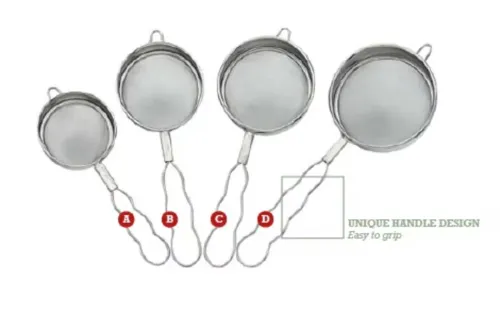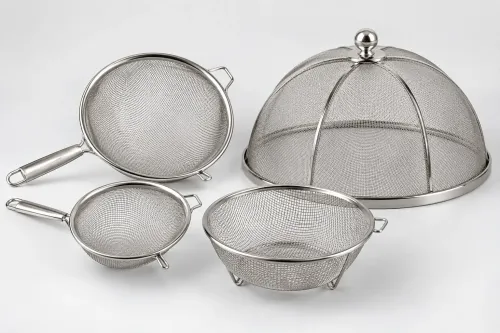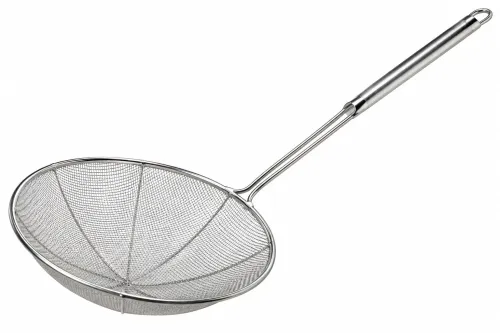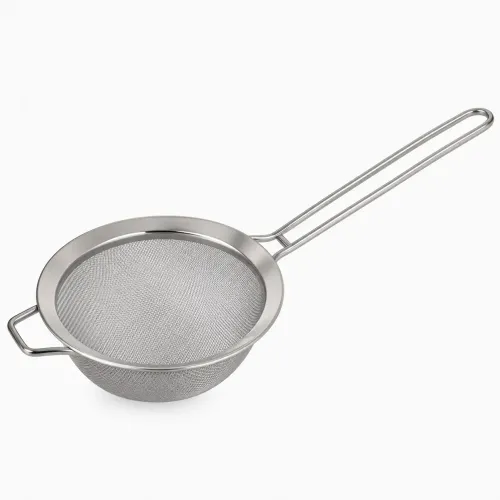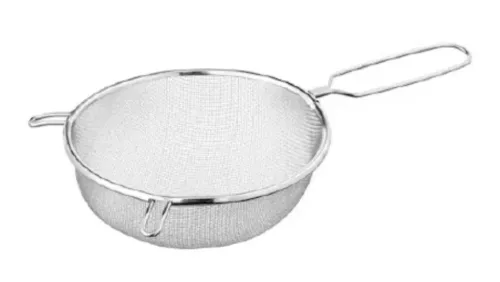
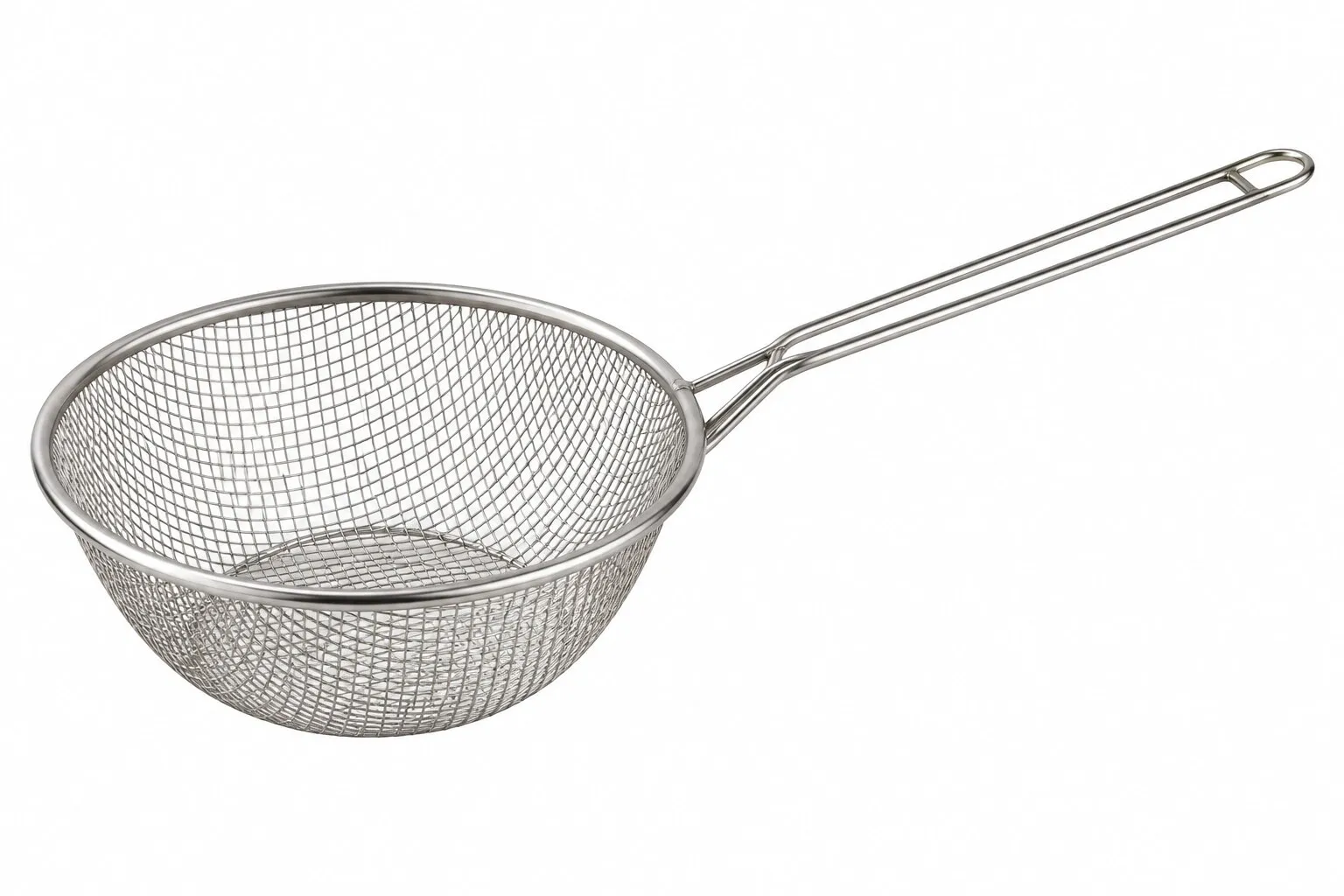
Oil does not drain efficiently simply because a strainer looks open: aperture, open area, basket shape, food load, lifting angle and dwell time determine how much oil leaves with each batch. By the end, you will know how to evaluate a strainer’s drainage design, use it without pooling or splashing, and compare its dimensions with your fryer before purchase.
Key takeaways
- Prioritise aperture size and open area, not mesh count alone.
- Choose a basket that keeps food above pooled oil while draining.
- Select a handle that balances a loaded basket without splashing.
- Check fryer dimensions, basket capacity and material before purchasing.
How a Deep Frying Strainer Releases Oil After Lifting
Oil drains fastest when a loaded deep frying strainer gives it a short, unobstructed path back to the fryer. Mesh openings must pass liquid without retaining batter fragments, while the basket must expose enough open area after food, crumbs and oil film cover part of the mesh.
Drain rate depends on:
- Oil temperature: hotter oil flows more easily, so test at the intended frying temperature rather than with cool oil.
- Load mass: an overloaded basket holds oil between pieces and presses food against the mesh.
- Basket depth: a deep basket creates a longer internal oil path and gives oil more places to pool.
- Lift angle: tilting the strainer toward its drain side uses gravity to move oil toward a low point.
- Dwell time: holding the basket above the fryer for a measured interval releases more oil than lifting and moving it immediately.
- Aperture and wire diameter: larger openings and thinner wire increase open area, while a fine mesh blinds faster when crumbs or batter coat it.
A shallow, wide basket suits food spread in one layer; a deep basket carries more product but drains more slowly when packed. A rigid handle keeps the basket at its intended angle without rotation, and gentle movement can loosen trapped oil without splashing. Do not judge performance from an empty basket.
A practical production test records the food load, oil temperature, immersion time, lift angle and dwell time, then weighs the oil released during a fixed interval. This exposes a strainer that appears open but performs poorly under real oil draining conditions.
A tool designed to lift food also needs a separate finer filtration stage if the goal is to clean frying oil.
Why Aperture and Open Area Matter More Than Mesh Count Alone
Mesh count is only a starting label. The manufacturer must specify the clear mesh aperture, wire diameter and open area, because square woven wire mesh follows approximately: open area = 100 × [a/(a+d)]², where a is the aperture and d is wire diameter.
Two strainers with the same mesh count can therefore drain at different rates.
| Food | Mesh or hole choice | Basket geometry |
|---|---|---|
| Fries | Larger mesh aperture and high open area | Shallow, wide basket for one layer |
| Pakoras | Medium aperture with firm wire | Moderate depth to retain irregular pieces |
| Battered fish | Larger aperture than a crumb filter | Broad support that limits sticking and breakage |
| Dough pieces | Aperture smaller than the smallest piece | Deeper basket with a stiff rim |
| Fried crumbs | Fine woven wire mesh or perforated sheet | Separate filter basket, not the main lifting tool |
A finer mesh is not automatically better. Small openings retain batter fragments, expose more wire surface to oil and clog quickly, increasing the oil film carried from the fryer. High-throughput designs trade some particle capture for unobstructed open area.
Woven wire mesh suits varied, smaller openings and good particle retention. Perforated sheet provides fixed holes that are easier to inspect and brush clean. The specification should state the actual aperture or hole size, wire diameter or sheet thickness, open-area percentage, basket diameter and depth, and tested working load.
Use a separate fine filter for oil cleaning. Combining high-flow food lifting with fine filtration produces a slow-draining basket that blinds easily.
How Basket Shape and Handle Design Prevent Pooling and Splashes
A basket that drains safely gives oil a downhill route instead of a flat surface where liquid can collect. A shallow, wide perforated frying strainer suits food spread in one layer; a deep basket carries more food but lengthens the oil’s path and traps liquid between pieces.
Choose basket geometry that directs oil toward one low edge when you hold it at its normal draining angle. Avoid deep, flat-bottomed pockets: they retain oil, increase weight, and release a sudden splash when the tool moves.
- Use a rolled perimeter wire, reinforcing hoop, or formed rim to maintain rim stiffness under a wet load.
- Keep the mesh or perforated sheet continuously supported so it does not sag into an oil-holding fold.
- Join the handle around a continuous, rigid rim rather than an unsupported mesh section.
- Eliminate exposed folded pockets and sharp wire ends, which collect carbon and can snag food during cleaning.
The handle length must keep your hand outside the hot oil plume without making the tool unwieldy. Set the handle angle so your wrist naturally holds the basket tilted toward its drain side, not level over the fryer. Excessive length increases leverage at the mesh-to-handle joint; insufficient length encourages you to hover over the vat.
Lift smoothly, pause above the fryer, and tilt gradually. Do not jerk or swing a loaded basket, because pooled oil can surge over the rim and splash. Test the design with its intended food load and hot oil, recording the lift angle, dwell time, and oil released rather than judging an empty basket.
Choosing the Right Tool and Checking Its Fit Before Purchase
Choose a deep frying strainer when you lift repeated, substantial batches and need the food to drain above the vat before transfer. Its basket supports the load, while its open area releases oil faster than a fine filter.
Do not use one tool for both high-flow lifting and oil cleaning; crumbs can blind fine openings and leave food carrying excess oil.
| Tool | Choose it when | Main limitation |
|---|---|---|
| Deep frying strainer | You need to lift fries, pakoras, battered fish or dough pieces in a supported batch and drain them over the fryer | A deep or overloaded basket holds oil in its lower layer |
| Spider skimmer | You need to scoop loose food quickly from a wok or shallow fryer | Flexible wire and a shallow bowl provide less load control |
| Fryer basket | You want a fixed batch size, repeatable immersion and easy lowering into a compatible fryer | It is tied to the fryer’s dimensions and may not suit transfer between vats |
| Slotted spoon | You are removing a few large pieces or checking doneness | Its small capacity makes production service slow |
| Perforated ladle | You are lifting irregular portions while retaining some liquid or sauce | The bowl drains more slowly than an open basket |
| Fine-mesh skimmer | You are collecting crumbs, batter fragments or very small particles | Fine openings clog and carry a heavier oil film |
Before buying, measure the vat opening, oil depth, rim height and clearance to the transfer container. Confirm the basket’s loaded capacity, handle reach, joint rigidity, nominal aperture and open-area percentage. A basket that fits empty can become unstable, scrape the fryer or submerge its handle when loaded.
What a Manufacturer Should Test and Specify for Commercial Buyers
Compare a commercial kitchen strainer by measured capacity and test results, not by “stainless steel kitchen strainer” alone. Request the aperture, wire diameter or sheet thickness, open-area percentage, basket diameter and depth, handle length, total mass and tested working load.
| Item | What the manufacturer should specify | What you should compare |
|---|---|---|
| Aperture and flow | Clear hole size, wire diameter, and open area; woven wire open area is approximately 100 × [a/(a+d)]² | Smaller apertures retain crumbs but clog faster and carry out more oil |
| Fryer fit | Basket diameter, depth, rim height, handle length, and clearance from the fryer rim and heating elements | A basket that is too deep contacts the element; a short handle leaves your hand over hot oil |
| Drain performance | Food type, loaded mass, oil temperature, immersion time, lift angle, dwell time, and oil mass released during a fixed interval | Empty-basket drainage proves little; batter and crumbs can seal openings |
| Strength | Tested working load, permanent deformation after loading, handle-to-hoop weld quality, and total mass | A light frame that bends under a full load is not a durable saving |
| Material and finish | 304 stainless steel or 316 stainless steel, weld finishing, and passivation where specified | Choose 316 for chloride cleaners, salt or brine exposure; inspect welds for heat tint and rough beads |
Ask Unistar Kitchen Strainers for these figures when a custom cut strainer must match a particular fryer, rather than accepting a catalogue diameter alone.
- Confirm the test uses the food load and oil temperature your kitchen actually operates.
- Check that the declared working load includes the handle and rim, not only the mesh.
- Reject crevices, carbonized residue traps, and unfinished welds that make cleaning unreliable.
Related products
 | Cut Strainers Specially designed to suit specific requirements We are leading manufacturers, suppliers and Exporters of Tea Strainer, Coffee Strainer, Wire Mesh... View product → |
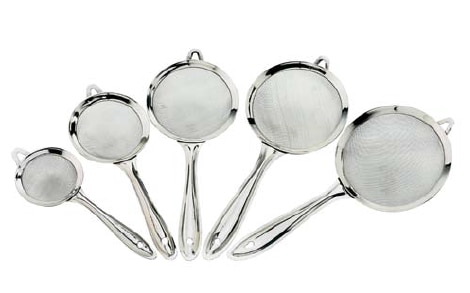 | KitchenStainers The Flat Handle Strainer simplifies kitchen tasks with its sleek design and efficient functionality. View product → |
Frequently asked questions
How does a deep-frying strainer release oil after lifting?
Oil drains through the mesh when the basket provides a short, unobstructed path back to the fryer. Remove excess food and crumbs that block openings.
Why do aperture and open area matter more than mesh count?
Aperture size determines whether oil and food particles pass through, while open area shows how much mesh remains available for drainage after loading.
How do basket shape and handle design prevent pooling and splashes?
A suitable basket shape keeps food spread above pooled oil, while a balanced handle lets you lift and hold the load steadily without sudden tilting.
What should you check before purchasing a deep-frying strainer?
Measure the fryer opening and oil depth, then check basket capacity, handle clearance, material, mesh construction and compatibility with your workflow.
What should commercial buyers ask a manufacturer to test and specify?
Ask for stated dimensions, material grade, aperture size, open area, load capacity, handle attachment details and test methods for drainage, balance and durability.
Related products
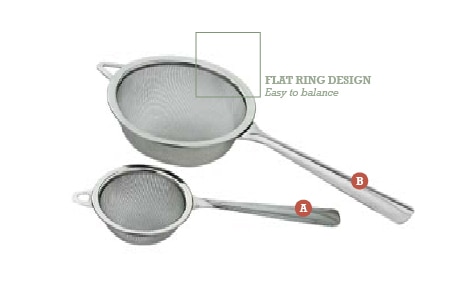 | KitchenStainers The Sober Strainer embodies simplicity and functionality, designed for practicality in the kitchen. View product → |
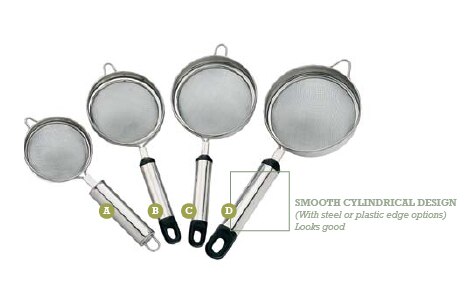 | KitchenStainers The Pipe Handle Strainer revolutionizes kitchen straining with its innovative design and ergonomic handle. View product → |
 | Filters and Sink Strainers Filters and sink strainers are essential kitchen accessories for maintaining cleanliness and preventing clogs. View product → |
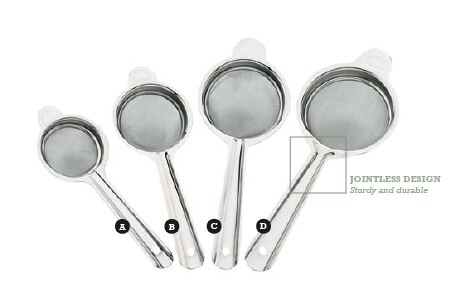 | KitchenStainers The Jointless Strainer introduces a seamless approach to kitchen tasks, boasting a unified design for effortless straining. View product → |