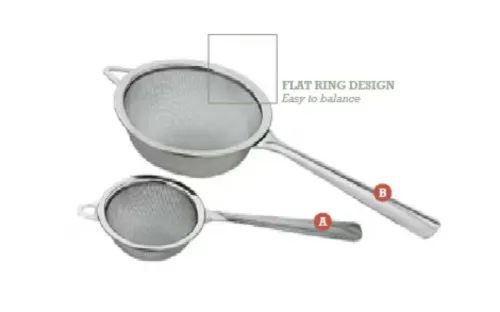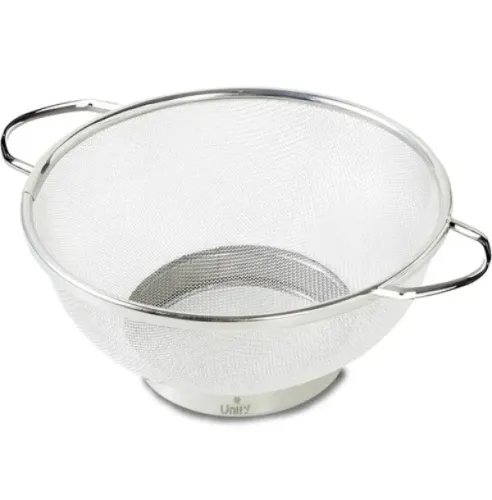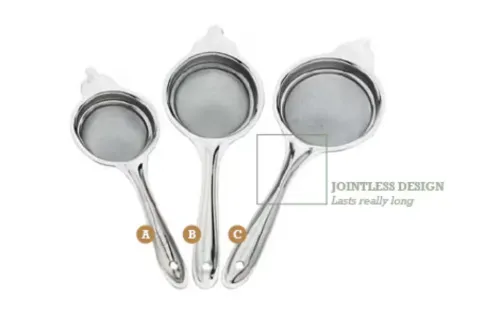


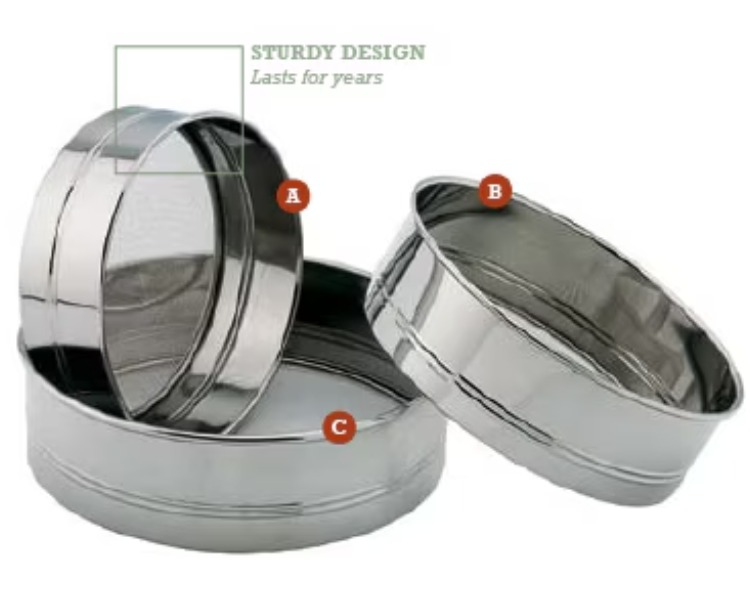
Businesses that work with different ingredients or screening requirements may find it inconvenient to maintain a separate complete sieve for every task. Products from an interchangeable sieves manufacturer can provide another approach by allowing compatible screening components to be changed according to the required application.
For restaurants, bakeries, commercial kitchens, food-related businesses, kitchenware distributors, and other professional buyers, the value of an interchangeable system depends on how frequently screening requirements change.
Understand When Interchangeability Is Useful
A fixed sieve can be perfectly suitable when the same mesh specification is used repeatedly.
An interchangeable system becomes more relevant when users need different screening levels while retaining compatible supporting components.
This may help businesses that process multiple ingredients or need flexibility without maintaining numerous complete sieve assemblies.
The decision should therefore be based on actual workflow rather than assuming that an interchangeable design is automatically superior.
Compatibility Is the First Requirement
An interchangeable sieve system is only convenient when its components fit correctly.
Before purchasing, buyers should establish which mesh sections, frames, or other components are designed to work together. Compatibility should be clearly documented where possible, particularly for businesses intending to reorder individual parts later.
Distributors should also understand the system well enough to explain compatibility accurately to customers.
Mesh Options Should Match Real Applications
The number of available mesh options is less important than whether those options match the buyer's actual screening requirements.
Commercial users should identify the ingredients being processed and the desired separation before choosing the range they need.
A practical procurement list might include only a few frequently used mesh configurations rather than every available option.
Examine the Locking and Fitting Arrangement
Where components are designed to be removed and replaced, the fitting mechanism becomes an important area to inspect.
The parts should assemble as intended and remain appropriately positioned during normal use. Buyers should examine representative samples and follow the manufacturer's usage instructions.
Repeated changing, washing, and storage also make construction and finishing important considerations.
Plan for Cleaning and Component Management
Interchangeable products introduce an additional operational requirement because separate components need to be cleaned, dried, stored, and kept organised.
Commercial kitchens should have a straightforward method for identifying and storing the different mesh sections. Otherwise, the flexibility of the system can be offset by misplaced or incorrectly selected components.
Businesses should also follow material-appropriate cleaning practices.
Consider Replacement Availability
One potential advantage of a component-based system is the ability to obtain compatible parts, but buyers should confirm their availability before purchasing.
Ask whether individual mesh components can be reordered and whether specifications are expected to remain available for repeat requirements.
This is especially relevant for distributors and commercial operations that expect to use the system over an extended period.
Compare Total Value Rather Than Initial Cost
A fixed sieve may have a straightforward initial purchase cost. An interchangeable system should instead be evaluated according to the number of screening requirements it can practically support.
Consider:
- Number of required mesh configurations
- Frequency of changing between them
- Storage space
- Replacement component availability
- Cleaning requirements
- Purchase quantity
- Expected usage pattern
This provides a more realistic basis for comparison.
Choose a Manufacturer With the Required Product Support
Commercial buyers in Mumbai and across Maharashtra should be ready to explain their screening applications, required sizes, quantities, and expected mesh configurations when discussing interchangeable products.
Unistar Kitchen Strainers manufactures strainers, sieves, baskets, and related kitchenware for different business requirements. For buyers considering an interchangeable sieves manufacturer, product compatibility, mesh availability, construction, replacement options, and repeat supply should all be confirmed before a larger order is placed.
When the system genuinely matches the workflow, interchangeable sieves can provide a practical way to manage multiple screening requirements without treating every task as a completely separate equipment need.