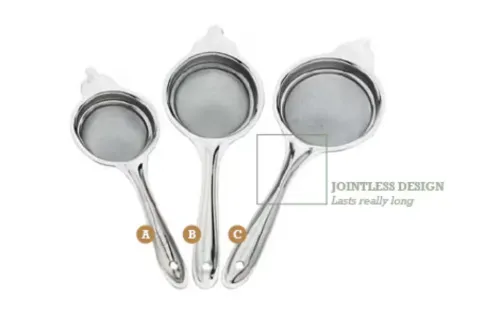


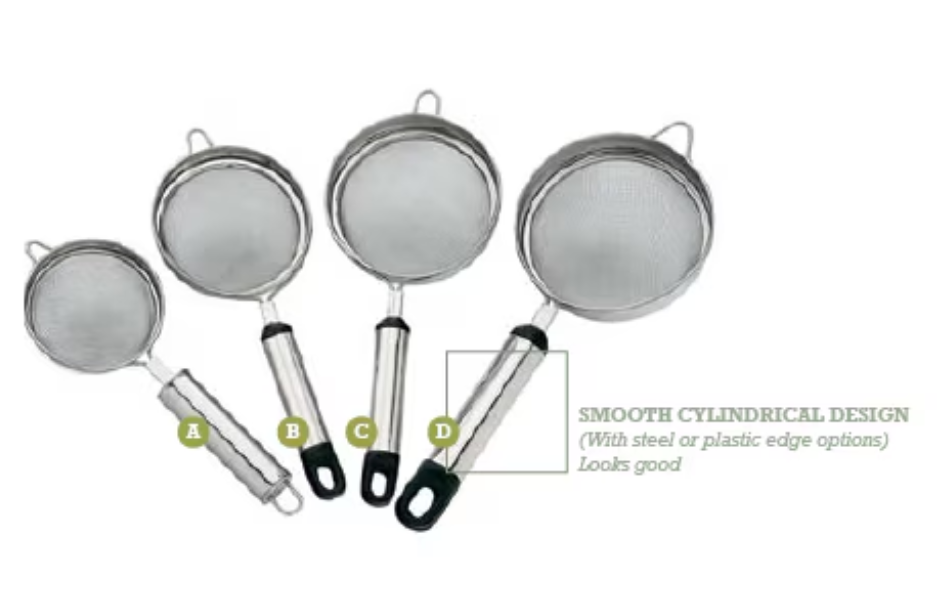
A kitchen strainer may appear simple, but frequent use quickly reveals differences in construction quality. Weak rims can lose shape, inconsistent mesh can affect draining, and uncomfortable handles can make repetitive tasks frustrating. This makes product quality especially important for restaurants, caterers, dealers, and other buyers sourcing utensils in quantity.
When evaluating stainless steel kitchen strainer manufacturers, it helps to understand the characteristics that influence day-to-day performance.
Material Is Only the Starting Point
Stainless steel is widely used in kitchenware because suitable grades can provide useful corrosion resistance, cleanability, strength, and an attractive finish.
Yet material alone does not determine whether a strainer is well made.
The finished product also depends on:
- Mesh quality
- Frame construction
- Joint strength
- Edge finishing
- Handle design
- Dimensional consistency
- Manufacturing workmanship
A well-finished product combines these factors rather than relying on material description alone.
Mesh Quality Affects Everyday Performance
The mesh is the working part of many strainers. Its openings should suit the ingredient and task.
An overly fine mesh may slow drainage where rapid liquid removal is required. A very open mesh may be unsuitable for smaller particles. Buyers should therefore match mesh characteristics with actual kitchen usage.
Uniformity matters as well. Consistent openings help the utensil perform predictably across its working surface.
Commercial Kitchens Need Structural Stability
Restaurant and catering utensils often experience considerably more handling than products used occasionally at home.
Strainers may be lifted when filled, washed frequently, stacked with other utensils, and moved between preparation areas throughout the day.
A stable rim helps preserve shape. Handles and joining points should also be examined because these areas experience repeated stress.
Commercial buyers should consider how the utensil feels under realistic working conditions rather than judging it only while empty.
Cleanability Deserves Attention
Food-contact equipment should support appropriate hygiene practices. Complicated joints and poorly finished surfaces may make cleaning more difficult.
Smooth finishing and accessible surfaces can make routine maintenance easier. Mesh areas should be cleaned thoroughly because particles can become trapped within small openings.
Food businesses should always use utensils suitable for their intended application and follow applicable food-safety and sanitation requirements.
Manufacturer Selection Matters for Bulk Purchases
Buying one strainer and purchasing hundreds for distribution are very different decisions.
Dealers, wholesalers, and commercial kitchen suppliers need repeatability. If dimensions, mesh, or finishing change noticeably between batches, inventory becomes harder to manage and customer expectations become difficult to meet.
When evaluating manufacturers, ask about:
- Product sizes available
- Mesh specifications
- Construction details
- Bulk order capabilities
- Packaging
- Product consistency
- Replacement and repeat-order availability
For buyers in Mumbai and other parts of Maharashtra, sourcing from an established manufacturing market can also simplify product discussions and distribution planning.
Unistar Kitchen Strainers manufactures stainless steel strainers and related kitchenware in Mumbai for dealer, distributor, hospitality, and other requirements. Buyers can evaluate products according to the application rather than treating every stainless steel strainer as identical.
The Best Choice Begins With the Intended Use
There is no single strainer specification that suits every kitchen task.
A tea strainer, frying strainer, draining basket, and general kitchen sieve perform very different jobs even though all involve separation.
Before ordering, identify the ingredient, quantity, working temperature where relevant, frequency of use, desired dimensions, and cleaning environment. These details make manufacturer discussions much more productive.
A reliable stainless steel kitchen strainer is the result of suitable material, consistent mesh, stable construction, practical finishing, and the right dimensions. Buyers who evaluate all five factors are better positioned to select utensils that perform consistently in real kitchens.