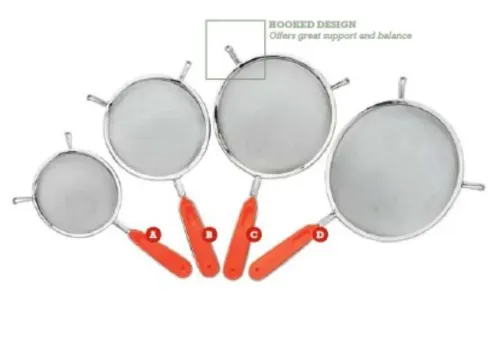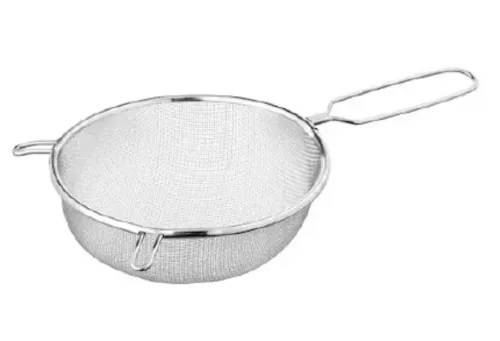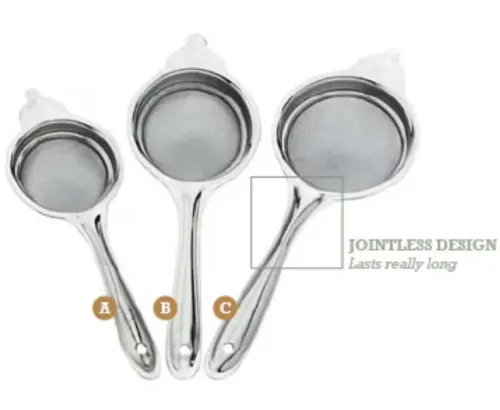


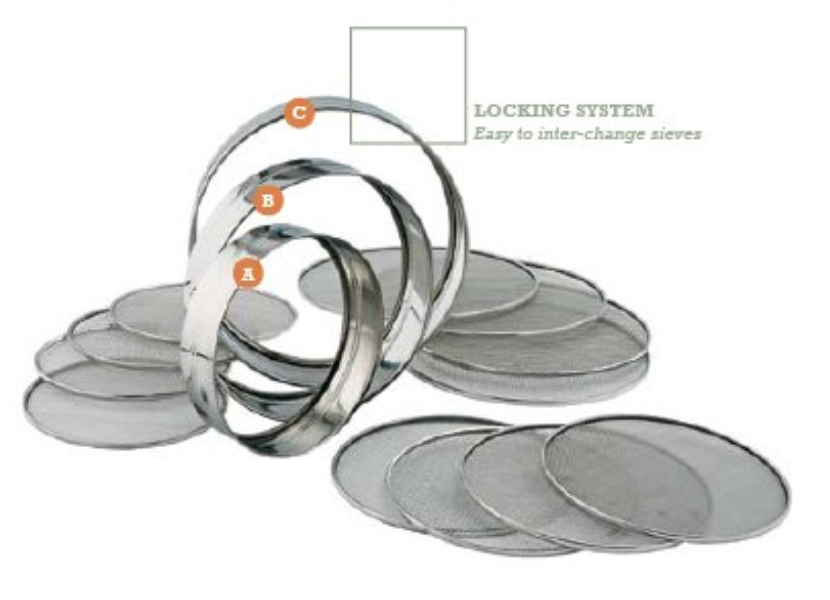
Food preparation rarely involves ingredients of one consistent size. Flour, grains, dry ingredients, and other materials may require different levels of separation. Keeping a completely separate utensil for every requirement can take up storage space and complicate kitchen organization.
Inter Changeable Sieves offer a more flexible approach by allowing users to work with different sieve options according to the preparation task.
Why Mesh Size Changes the Result
The opening size of a sieve determines which particles pass through and which remain behind. This makes mesh selection an important part of ingredient preparation.
A finer sieve can provide closer separation, while a wider mesh allows larger particles to pass more easily. Using an unsuitable mesh can make a simple task unnecessarily slow or produce an inconsistent result.
Interchangeable systems are useful because the working sieve can be changed without necessarily replacing the complete setup.
Flexible Equipment Can Simplify Kitchen Storage
Storage becomes a practical issue in restaurants, catering businesses, bakeries, and other commercial food environments. Multiple utensils performing closely related functions can quickly occupy valuable shelf space.
A well-designed interchangeable sieve system can help kitchens:
- Organize different mesh requirements
- Reduce unnecessary duplication
- Switch between preparation tasks
- Keep related components together
- Maintain a more structured utensil inventory
The actual benefit depends on how frequently different sieve grades are needed.
Useful Considerations for Commercial Buyers
When purchasing interchangeable sieves, compatibility deserves close attention. A replacement sieve is useful only when it fits its supporting component correctly.
Buyers should examine the fit, frame strength, mesh uniformity, ease of insertion and removal, and the stability of the assembly during use.
For businesses ordering multiple units, it is also sensible to confirm whether replacement sieve components can be sourced later. This can make inventory management easier when individual components need replacement.
Different Businesses Have Different Requirements
A catering company handling large quantities may value quick changes between preparation stages. A retailer may prefer stocking several common specifications to address different customer requests.
Hotels and restaurants may focus more heavily on durability and cleaning convenience because utensils are used repeatedly by kitchen teams.
Home users generally work with smaller quantities but can still appreciate the flexibility of having multiple sieve options.
Mumbai's diverse food industry creates demand across all these categories. From hospitality establishments to kitchen equipment markets serving Maharashtra, buyers may require different diameters and mesh configurations based on their customer segment.
Maintenance Should Be Simple
Sieves perform best when their openings remain unobstructed. Fine particles can become trapped in mesh if utensils are not cleaned properly after use.
Users should remove residues carefully, follow appropriate washing procedures, dry and store components as recommended for their material, and inspect them for damage.
Interchangeable components should also be stored in a way that protects their shape. A bent sieve may no longer sit properly in its supporting frame.
What Makes a Good Sieve System
Useful products generally combine practical design with consistent manufacturing.
Look for:
- Even mesh formation
- Stable edges
- Accurate fitting
- Easy component handling
- Suitable material and finish
- Availability of required sizes
- Consistency across replacement components
Unistar Kitchen Strainers manufactures kitchen strainers, sieves, and related products in Mumbai for different market requirements. Buyers purchasing interchangeable systems in larger quantities can benefit from clearly specifying the dimensions, mesh needs, application, and expected quantity.
Interchangeable sieves are ultimately about flexibility. When different ingredients require different levels of separation, a thoughtfully selected system can help kitchens change tasks more efficiently while keeping utensil storage manageable.